MicrobeGrower
Beyond the Soil Test: Understanding the Living System Beneath Your Feet
Science-backed insights on soil biology, regenerative agriculture, and building living soil systems that reduce inputs while increasing yields.

More Than Mud: The Secret Life of Your Soil and How to Feed It
The soil ecosystem operates through specialized microbial guilds, each performing distinct ecological functions:

Unlocking Clay Soils: The Science of Flocculation and Calcium Management
When clay platelets lie flat against one another in tightly packed arrangements—a condition called dispersion—the microscopic pore spaces essential for air and water movement effectively disappear. Oxygen cannot penetrate to support root respiration or aerobic microbial activity.
Powdery Mildew Defense: Building a Living Fungal Shield Through Foliar Biology
Conventional fungicide programs require continuous investment with no reduction over time as resistance develops. Biological approaches involve lower long-term direct costs. Once beneficial populations establish, application frequency typically decreases while effectiveness increases, creating improving economics over successive seasons.

Natural Aphid Control: Building Your Garden's Defense Team
The sustainable solution lies not in sprays and chemicals, but in cultivating the natural predators that have controlled aphid populations for millions of years. By understanding and supporting these beneficial organisms, you can establish a self-regulating system that maintains aphids at manageable levels without constant intervention.
- Dec 9, 2025
The Soil Police: Biocontrol that Eliminates Root-Knot Nematodes
For advanced growers, conventional pest management is a financial and labor drain. If you are still applying expensive, reactive nematicides for Root-Knot Nematodes (RKNs) , you are treating the symptom, not building a self-regulating system.
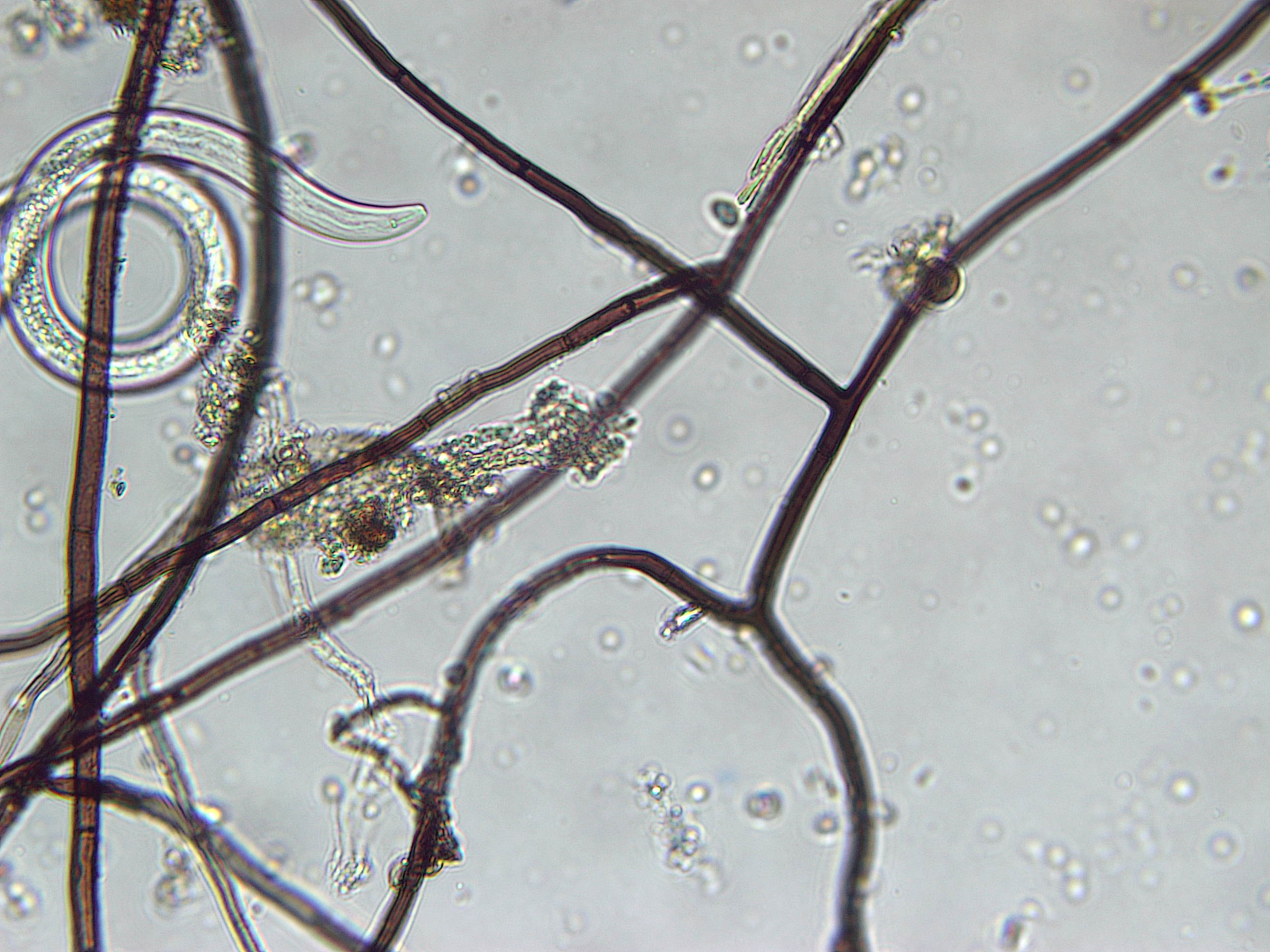
The key to biosecurity lies in the Trophic Cascade—the top-down control system in the soil.
The Core Mechanism: The Three Biological Armies
A healthy regenerative soil system uses a multi-tiered approach to suppress pests.
Predatory Nematodes (Tier 4): These are the "Soil Police". They use a large, armed mouth cavity (buccal armature) or piercing stylet to physically puncture the cuticle of plant-parasitic nematodes (PPNs) and suck out the body contents, removing them completely from the system.
Nematode-Trapping Fungi (Tier 3): Fungi like Paecilomyces lilacinus or Pochonia chlamydosporia parasitize the RKN eggs by penetrating the shell with enzymes, preventing hatching.
Fungal Guardians (Mycoparasites): Species like Trichoderma actively attack pathogenic fungi (like Pythium or Fusarium) by coiling around the hyphae and excreting powerful enzymes (chitinases and glucanases) to consume the invader.
Quick Tip: Attracting the Predators
Predatory Nematodes are cruising hunters and need a stable, aerobic habitat to move and hunt.
Action: Top-dress high-risk areas with coarsely-shredded, fresh hardwood mulch (high-lignin, high C:N ratio) or low-lignin straw.
Why it Works: This coarse material creates large, stable air pockets and water channels, maintaining the high-moisture, aerobic environment necessary for predatory nematodes to actively hunt. This simple act is prophylactic—you establish the protectors before the pathogen population explodes.
💰 Strategic Paywall / Call to Action
Tagging: [Biosecurity] [Trophic Cascade]
Call to Action: You've learned about the soil police, but what about the invisible, root-coating defense? Premium Issue 4: Trophic Cascade provides the final piece of the biosecurity puzzle: using the right Bacillus subtilis strains to prime the plant’s own defense system (Induced Systemic Resistance, or ISR) and create a competitive barrier on the root surface, securing your crop protection.
Click here to subscribe and achieve the biological biosecurity that eliminates your pest control budget!